Introduction
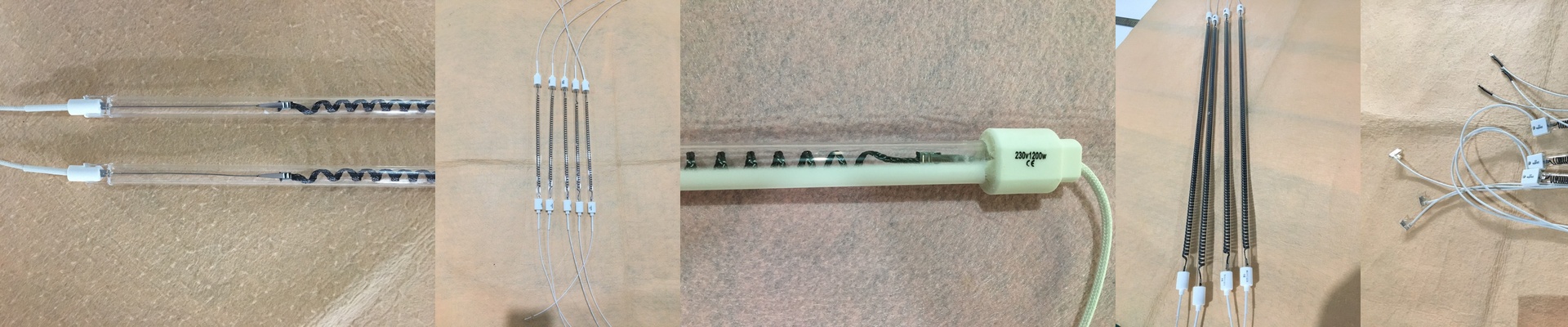
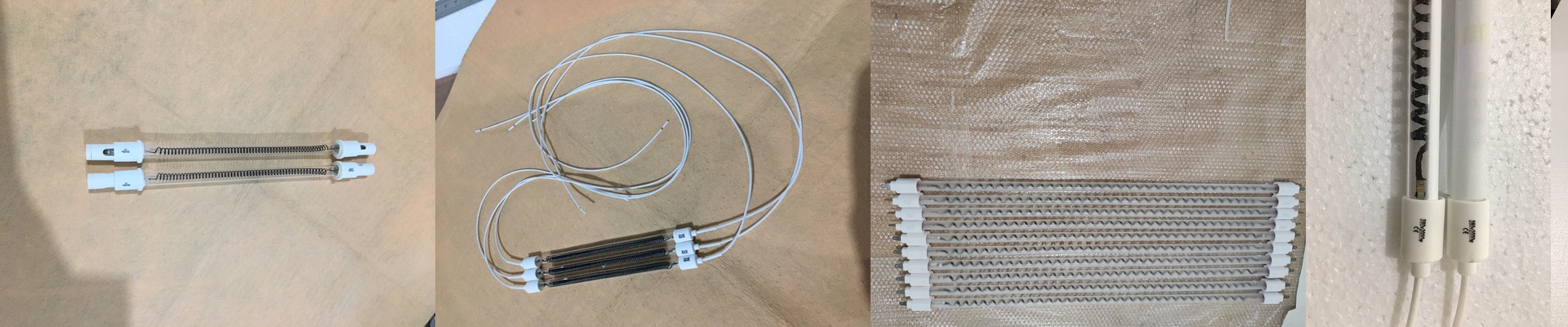
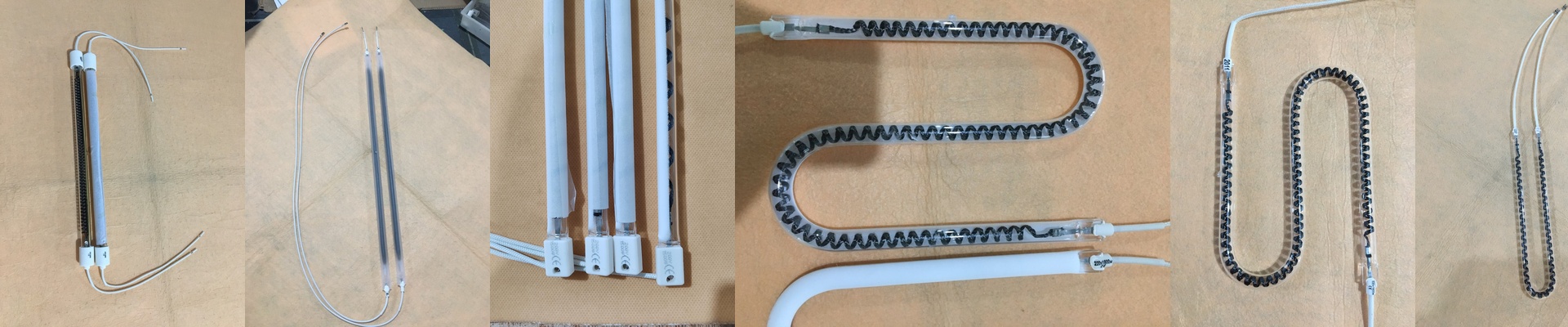
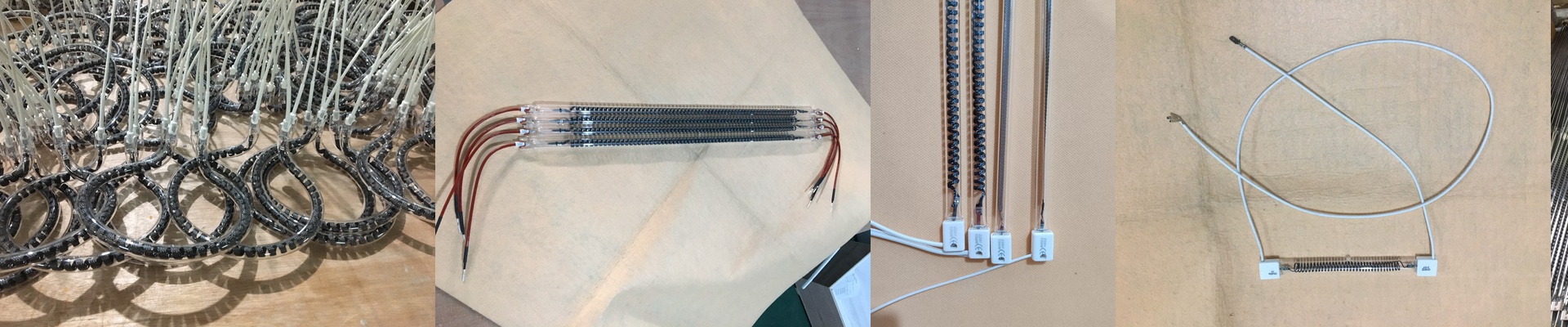
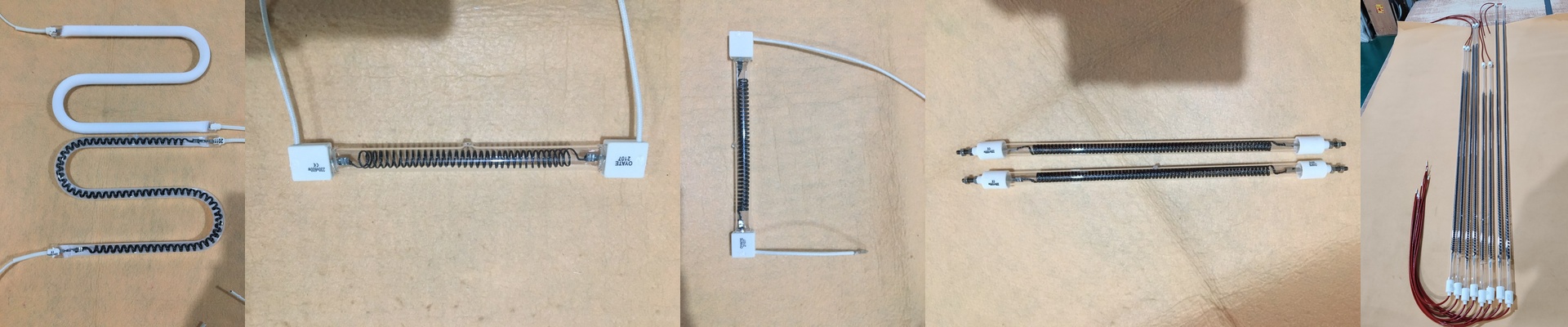
We build the 1000W, 1200W, 1500W, and 1600W 220V carbon fiber infrared heat lamp for one reason: fast, controllable, high-density heat where you need it—right on the line. These lamps are not general-purpose heaters. They are engineered for industrial heating tasks that demand quick warm-up, stable output under cyclic duty, and a compact footprint that fits tight machine spaces.
Technical Deep-Dive: Power, Voltage, and Output Density
The wattage range (1000W to 1600W) is a direct way to match heat output to the thermal load of the process. Higher wattage shortens cycle time and compensates for heat losses in open or semi-open setups. Running on 220V gives you a practical power supply choice for many plant electrical systems, and it reduces the current load compared with lower-voltage options, which can simplify wiring and contactor sizing. Carbon fiber elements deliver high heat density in a small envelope. That density is what lets us put serious power into a focused zone without needing a large heater block. But it also means the surrounding hardware—reflector, mounting, and insulation—must be spec’d to handle the resulting temperature profile. If you push the upper end of the range, you must ensure your machine’s cooling and ventilation are sized to keep the lamp’s immediate environment within safe limits.
Material and Design: Why Carbon Fiber, Why the Build Details
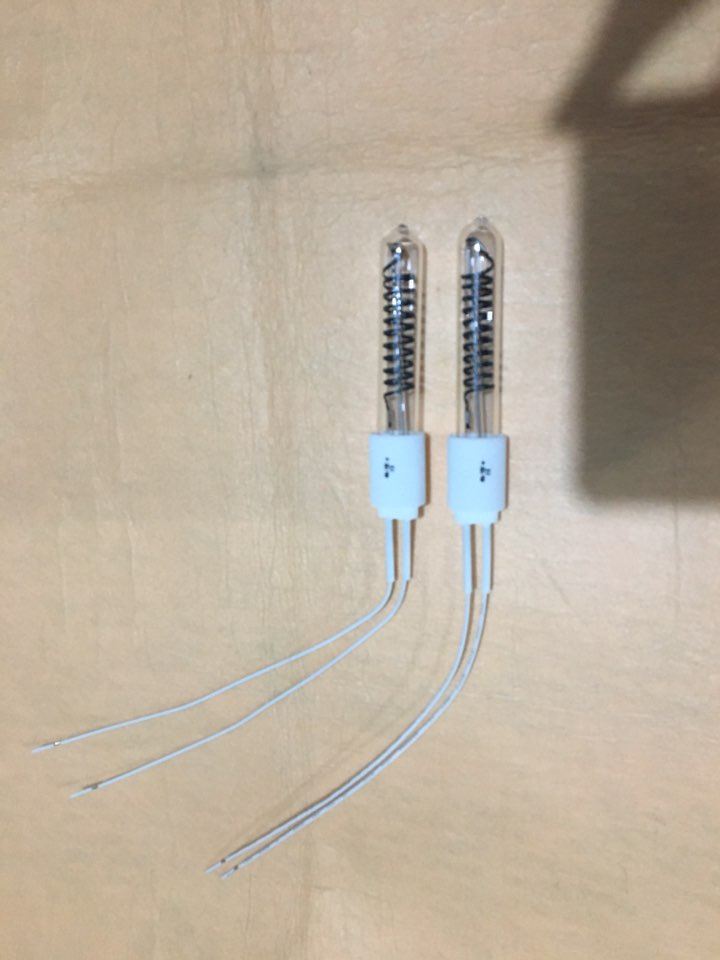
Carbon fiber infrared elements are chosen because they heat up quickly and emit strongly in the infrared spectrum, which transfers energy efficiently to targets without heating the surrounding air. This direct energy transfer reduces wasted heat and helps maintain repeatable temperature control in production cycles. The quartz envelope is standard for these lamps because it holds the element, withstands thermal shock, and stays stable at high operating temperatures. Halogen chemistry inside the envelope helps maintain element cleanliness over time, which supports consistent output and extends service life. In real-world terms, you get fewer sudden dips in performance and less unpredictable aging compared with basic open-coil designs. Mounting and connections matter just as much as the element. These lamps are designed to drop into standard fixtures with the right end-cap configuration, making replacement fast and minimizing downtime. That is the kind of practical detail that matters when you are running three shifts and a lamp burns out at 2 a.m.
Application and Benefits: Where It Works and What It Buys You
These lamps are commonly used in industrial heating, drying, curing, and forming applications where the target needs rapid, localized heating. The benefit is speed: the element reaches operating temperature quickly, so you can cut warm-up time and reduce idle energy. The concentrated heat also allows tighter process windows, which helps with consistent part quality. You also get installation flexibility. The 220V rating and standardized fixture compatibility let you wire the lamp into existing equipment with fewer redesigns. In maintenance, the straightforward replacement process keeps the line running. Trade-off: high output density means you must manage the lamp’s surroundings. Keep clearances, verify reflector condition, and confirm your control strategy can handle the fast response. Do that, and you get a heater that specs out cleanly, installs quickly, and performs predictably under industrial duty cycles.