Dealing with Filament Fatigue in Pulse-Heating Lamps
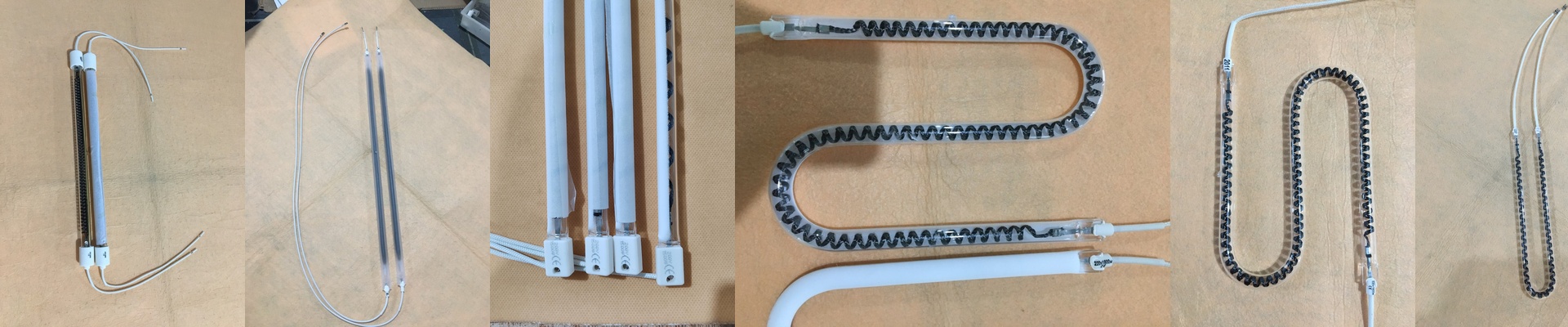
If you’re running infrared lamps on a rapid pulse cycle, you know it’s a brutal environment. You aren’t just heating things up; you’re cycling the power on and off tens of thousands of times. The filament doesn’t just get hot—it practically breathes. It expands and contracts violently every single time it flashes. This puts a massive amount of stress on the supports holding everything together. Here’s the problem: if those supports warp or shift even a tiny bit, the filament starts to sag. Once that happens, you get hot spots and uneven heat. Before you know it, you’ve got a burnt-out tube on your hands. The struggle with expansion We spend a lot of time obsessing over the support brackets because that’s where things usually go wrong. In high-speed flashing, the temperature jumps in milliseconds. It creates this “pumping” effect on the metal. To fight this, we use specific alloys for the supports. The goal is to make sure the metal expands at almost the exact same rate as the quartz glass. If the support expands too fast? It crushes the seal. Too slow? The filament starts to vibrate. It’s a delicate balance. Testing the breaking point We don’t guess. We run these things through 50,000+ cycles just to see when they’ll quit. We use high-res imaging to watch the filament centering. It sounds overkill, but a shift of just 0.5mm can totally mess up the radiation pattern on your workpiece. The trick is getting the tension just right. If we tighten it too much, the support snaps under the heat stress. Too loose, and it sags. We aim for that “Goldilocks” zone in the middle. The trade-off There is a catch, though. When you build a rigid support structure to keep things consistent, the lamp becomes more sensitive to outside vibrations. If your machine frame shakes or there’s heavy equipment slamming around nearby, a stiff filament is actually more likely to snap than a loose one. If you’re using these, make sure your mounting brackets are dampened. It protects the internals from the chaos of the factory floor. We built these lamps for the high-cycle environments where you can’t afford any drift in your heat—even if it means you have to be a bit more careful with how you mount them.